-
Women at Work
My Dad and I talked on the phone yesterday like we do most Saturday mornings and he asked me if I was still feeling sad. I know he meant well by the question, and was referring to that particularly depressed period I had a short while ago and not to my grief in general, but I don’t know how to respond to those kinds of questions. I think I will feel sad forever.
Still, I don’t want to be some kind of Gloomy Gus, bringing everyone down all the time or inserting Sarah’s name into situations and conversations when the mood is high and light. It’s just that I’m thinking about her a lot, even when I’m having a pretty good time or when I’m laughing and talking about something else. She’s the little presence in the room, just as she was often a little quiet presence in the room when she was still alive, looking at her iPad while we had guests or playing Minecraft while we ate dinner.
Some days it’s not so hard to balance her presence and her absence, both at the same time. Other days the sadness overwhelms me. I just can’t predict what I will feel on any particular day. I’ve had a string of pretty good days for the last week. I try to look for a pattern or reason why I might feel better so I can reinforce that but I’m not sure. I was working very hard this last week and maybe that helped. Feeling supported by Dr. Z also helped too.
I had to give a presentation this week to a group at work and it seemed to go pretty well. You know, the full PowerPoint with questions at the end. When I’m doing something like this I can block out my feelings about being The Mother of a Dead Child and just keep my tone light and bright and push forward. It’s almost like compartmentalizing myself. I guess that’s a good thing; it feels like a survival skill. It feels sometimes like a betrayal of Sarah to be able to function this well, but things have to get done. Sarah understood that Mommy had work to do.
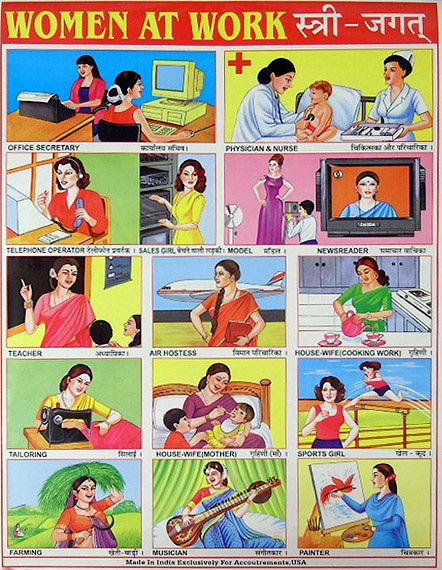
When I was pregnant with Sarah, I bought and framed a poster I found online, I think it was from India, called Women at Work. It’s bright and colorful and it shows women in a variety of occupations from airline pilot through teacher. It’s still hanging in her room. I think she liked looking at it.
-
The Castle
What is a fifty-nine year old woman supposed to look like? I asked Google this morning and I got some pictures of Christie Brinkley and Maria Shriver. Along with some photos of grandma-ish looking women with white hair. I don’t know whether I’m supposed to be in full grandma mode — of course, I’ll never be an actual grandma — or whether I should still be gearing up for bathing suit season. The last nine or ten months have been very hard on me. I feel like I look older and part of me no longer wants to be young at all.
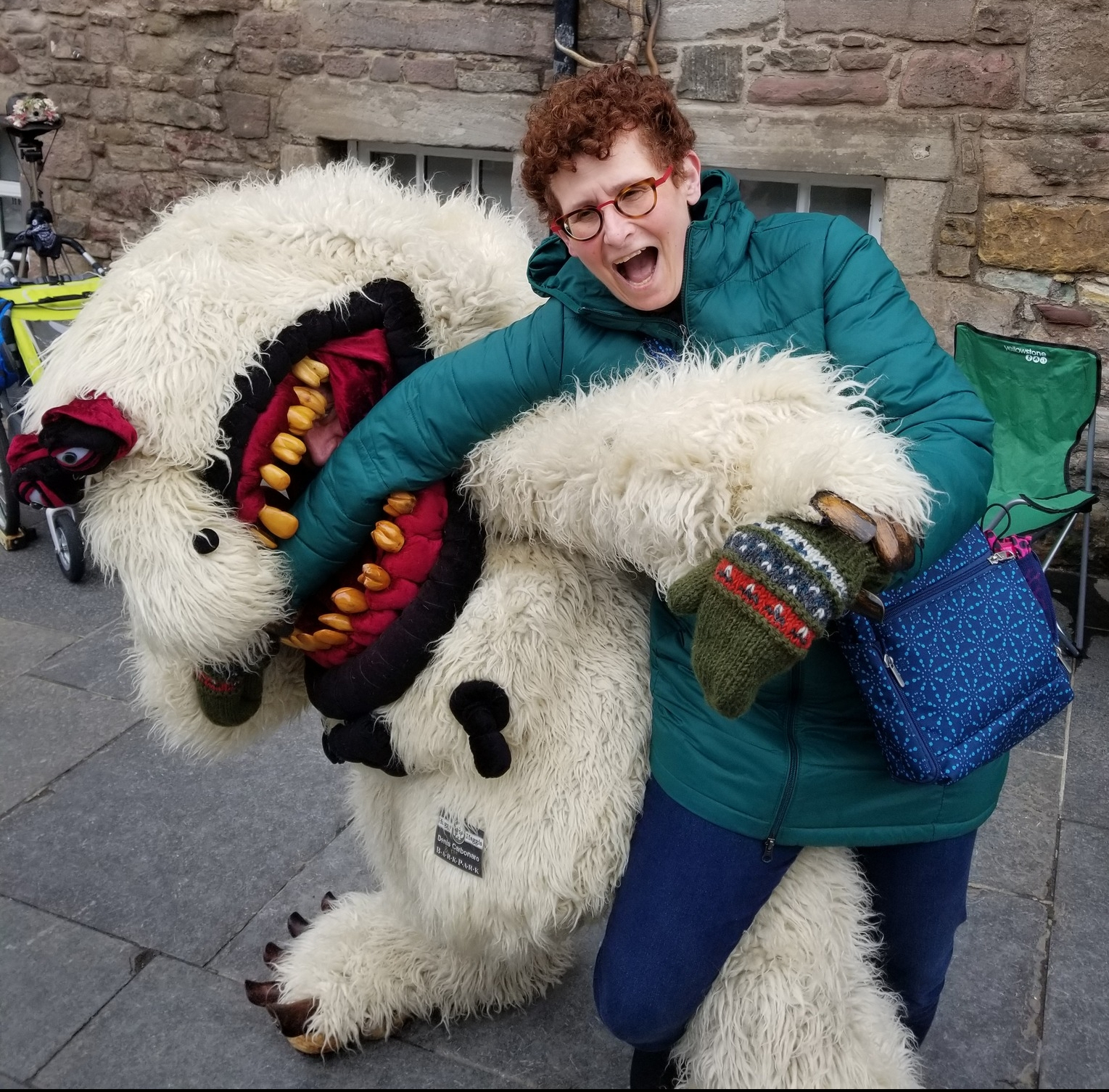
I’m posting a picture that Max took of me in Edinburgh in March, wrestling with The Happy Haggis who hangs out near The Castle. He was a nice haggis and we stuffed a couple of dollars in his mouth. I suppose I look young enough here, and I take after my mother in the fact that she didn’t go grey until her seventies or eighties. I guess that’s a good thing.
Part of me wishes my hair would turn grey or even white, however. That the experience of losing Sarah would just completely mark me, that there would be a clear before-and-after that would not only be prevalent in my own mind, but would be absolutely visible to everyone. “Her hair turned white overnight.” “She became an old woman that day.” It’s like what Teddy Roosevelt wrote in his diary on the day when both his mother and wife died: “The light has gone out of my life.”
But other times I get scared at this way of thinking, torturing myself that when Sarah “comes back,” she won’t be able to recognize me. Who is this old lady and where is my mom? I need to keep myself together and recognizable for her return. I already have a new car, new furniture in the house. I can’t make too many changes or she’ll be confused and scared. She has to know she’s still our highest priority no matter what.
-
Nurseling
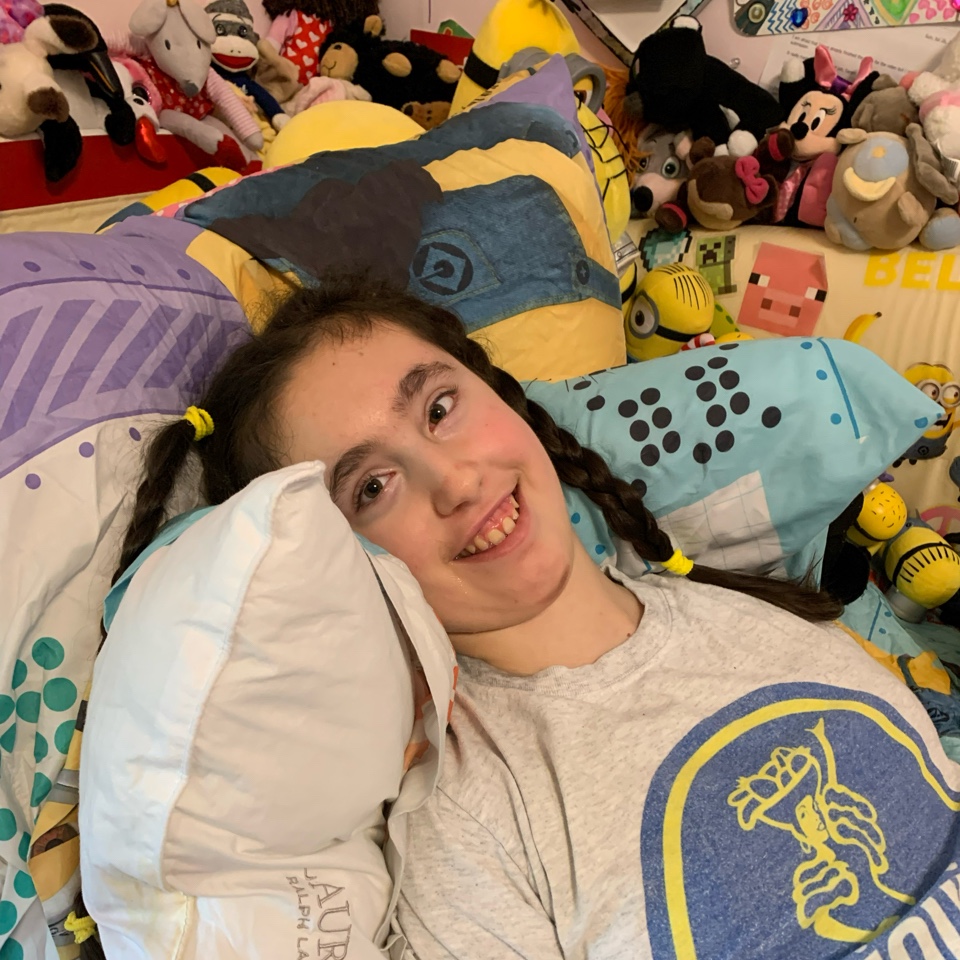
This is the last pictue I ever took of Sarah. I may have posted it before; it’s the icon for the blog anyway. I took it on August 11, 2022 and Sarah died on August 18. I love looking at pictures of Sarah growing up, seeing how her face and hair changed. When she was very little she always looked like a Mini Max. She came to look more like me too, I think.
She had a bob haircut for a long time and she wanted to grow her hair long so she started doing that in Middle School. She was the victim of so many horrible haircuts. I think stylists just wanted her out of their chair. I remember taking her once to a local salon and a Russian Stylist was really chopping her hair and kept saying “She is big baby.” No, she is not big baby, you are big bitch.
It hurts when I think that I will never take another picture of Sarah again, when I look at the photos on my cell phone for the last year and instead of mainly being Sarah, they are just a few selfies, our trip to the UK, and random shots of this or that. No Sarah at all. It’s a shock every time.
She will never develop beyond last August. Maybe if she had lived she would have wanted to indulge in some of those new trendy brightly colored hair highlights I see kids using, put a bit of blue or green or bright pink in her hair. Maybe she would have wanted to wear a bra, although her breasts were very small. We also had an appointment coming up just the week after she died to get her new eyeglasses. Maybe she would have chosen some really snazzy frames. Who knows.
Yesterday Polly was really agitated and wrought up, first of all because there is a lot of smoke here from the Canadian wildfires and people are being advised not to go out, so her only walk was in the backyard, but also because a mother deer was out on our front lawn for a while. We get a lot of deer around here although it’s pretty citylike. They really don’t have a lot of places to go and a lot of them make a bad end with cars. After the mother had been sniffing around our front lawn for quite a bit, and Polly had been going crazy at the window, I noticed that there was a tiny fawn near the trash cans. The deer got the fawn up and it nursed for a while and then she nudged it over to some big shrubs behind our driveway and I guess hid it in there before she went off to forage more.
I felt really bad for this mother deer and (I feel a little silly to say this) set out some carrots and water for her for when she comes back to check on her nurseling. Hopefully I’m not interfering with the fundamental laws of nature or putting my scent down and screwing up her bonding or recall of her baby or something like that. It’s so hard to be a mother and care for your tiny one. I really hope everything works out for them and they stay safe.
-
Physical Comedy
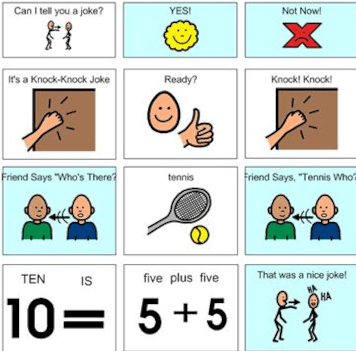
Sarah loved telling jokes and knock-knock jokes were a particular favorite. She had a page of them on her speech device. Knock-knock, who’s there? Boo. Boo who? You don’t have to cry, it’s just a knock-knock joke. I’m told a lot of kids with neurological, developmental or speech issues like knock-knock jokes. They like the way they get told the same way every single time, the way the joke unfolds according to a strict protocol that everyone understands, so the kid has control over the joke and can master how to tell it, as opposed to narrative type jokes or sarcastic one-liners, which can be harder to tell or to understand the point of. Of course a lot typical kids like knock-knock jokes too.
Sarah would often revert to the page of knock-knock jokes on her talker when she didn’t want to do schoolwork, or when she was feeling impish. She knew we would groan and beg her “No more knock-knock jokes!” and she would double down and torture us some more. She was especially devilish with her tutor, Emily, who really was a saint at putting up with the knock-knock jokes during lesson times.
Max always tells the story that Sarah’s first joke was at about six months old when he was getting her dressed and she took a sock and put it on top of her head and starting laughing hysterically. She was so pleased with her physical comedy. I really wish I had been there to see that.
She loved any kind of physical comedy from Max and me, and laughed at sneezes, pratfalls, and any bodily functions. She liked to see us bend over to pick things up off the floor with our tushes in the air. That always got a laugh. Any kind of stumble would get a laugh too, and she didn’t seem to pick up on the fact that it could be painful to trip since she was ordinarily the most empathic of souls.
She couldn’t stand to see us say no or reprimand Polly the Beagle, for instance. She would cry if she felt any animal or kid was being treated harshly. Max and I would be left basically whispering “No Polly, get out of the garbage,” because if we said it to the dog in a strong clear tone of voice, Sarah would cry. I think Polly was her alter ego in many ways, doing the naughty things she wasn’t capable of doing. She loved to see Polly’s antics. As you might guess, Polly is not a well-trained dog. But we love her a lot.
-
Miss Tish
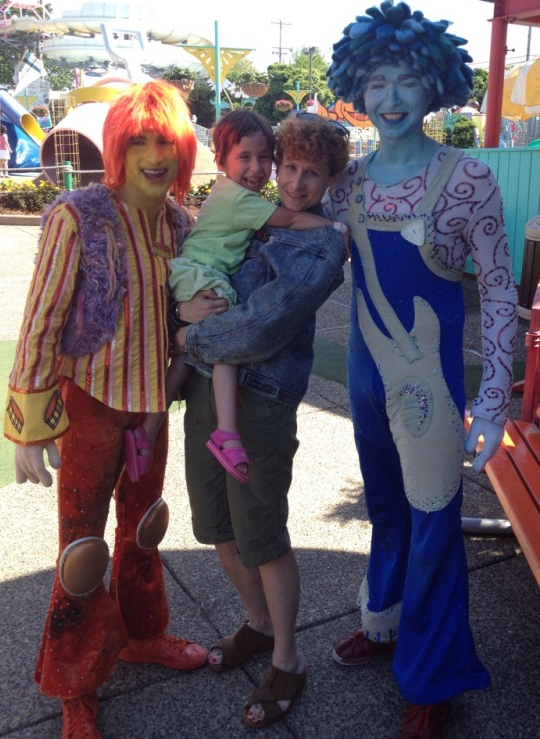
I used to like to refer to Sarah as “Mom’s Girl,” as in “How’s Mom’s Girl feeling this morning?” or “Does Mom’s Girl want to watch some YouTube?” Sarah seemed to like being called Mom’s Girl but Max sometimes objected that she was Dad’s Girl too and should be acknowledged as such. Of course, Sarah had about a million nicknames. She was Madame Tootsie Bagel, she was Penelope Picklebottom (don’t ask), she was Funny Bunny when she was first born and we were in the hospital together, then became Cueball later on in babyhood, and she was Mooshkie and Bungielein and Lucinda May Haversham and Miss Tish. Max called her Kiddo.
The name Madame Tootsie Bagel as I’ve explained previously was invented by my mother, who had a great facility for generating these sorts of nicknames, as was the name Miss Tish, which I understand is from a 1930’s radio show about a character named Lizzie Tish/Tizzy Lish from whom we get our phrase “having a tizzy.” My mother used to call me Lizzie Tish.
My mom invented all sorts of terms that have been passed down in the family, to Sarah and to my niece and nephews. I remember once years ago visiting my brother and his family when his kids were small and my sister-in-law threatened to use The Gazongi Treatment on the kids if they didn’t behave better. That was one of my mother’s better fantasy inventions. We never did find out what it involved but it sounded insanely brutal and vaguely Gestapoesque and was enough to keep my brother and me in line when we were little.
Once I was visiting my brother and his family in NYC when his first-born son was still pretty young, about 2 or 3. It must have been Thanksgiving or Passover. My nephew was playing with the swinging door to the kitchen, pretending he was the doorman, and I asked him if I could come in and visit my Dad. “He’s not your Dad! He’s my Papa Vic!” he replied, growing angry and upset. He was even crying. My sister-in-law came and scooped him up and they had a chat, and eventually he came back and informed me that Papa Vic was both my father and his grandfather and he loved all of us. But he didn’t seem convinced by the party line, and cognitively and developmentally I don’t think he was ready to conceive of his grandfather as having more than one role in the family.
I think it’s fun to have different roles to play, to take leave of your ordinary role sometimes, or see yourself as more daring or fun, and nicknames sometimes do that. I hope Sarah enjoyed her nicknames. I think she liked being Mom’s Girl, and Madame Tootsie Bagel, and Kiddo too. Our Girly-Whirl.
-
Project Linus
A friend messaged and said she had a bunch of jigsaw puzzles she could send me if I needed puzzles. It brought me back to a few years ago, Early and Pre-Pandemic when I was doing 1000 and 1500 piece puzzles pretty regularly. It was my obsession slash compulsion for a while, and then it just kind of died out. I guess this was before I started crocheting afghans. Or maybe that crocheting compulsion has ebbed and flowed, because I remember crocheting some blankets for the kids in the Occupy DC tents downtown in 2012. They looked very, very cold.
I tend to be compulsive about everything I do. Why can’t I be compulsive about something like jogging or yoga? I don’t know, it’s just never been that appealing. I did go through a stage back in Law School where I compulsively swam a mile at the pool every day, and if I missed a day, I felt like I was going crazy. That really fed into the eating disorder I developed in Law School.
Max had two great aunts when he was a child at the Jersey Shore. Apparently they were compulsive cleaners and it was uncomfortable to visit them because of all the cleaning products and sprays they used. But eventually they were overwhelmed by their cleaning compulsion and they flipped over and became hoarders and couldn’t throw anything away, no matter how small the debris was. So it was equally uncomfortable to visit them after that. Pick your obsession/compulsion carefully.
My Dad taught me to crochet. I guess that’s a bit unusual, but he had a slipped disc and did a lot of those projects while he was recovering. My mom did teach me to knit and sew. I’m not exactly a whiz with different stitches and I tend to stick to a basic stitch. I got into making blankets and afghans about 10 or 15 years ago when Sarah started having surgeries.
Sarah had a lot of orthopedic surgeries on her legs, feet, and hips. Her hips came out of the socket, which is common in kids with severe cerebral palsy. The rigidity and contractures of the muscles and tendons in the legs literally pulls the bones out of place. For her first surgery, her hipbone popped back into place when the contracture was released. But eventually she needed full hip surgery. And she needed surgery to straighten her spine, because she had a curve (scoliosis) that pulled her spine sideways, also from contractures. They placed a “Magec Rod” in her spine that was lengthened every 3-6 months. Her spine was beautifully straight after that, but it was a huge surgery with a long recovery.
So when Sarah had her first surgery, and we got to meet her in the Recovery Room, she was covered up by a beautiful little handmade knit blanket. There was a tag that said it was from Project Linus, a volunteer project that makes handmade blankets for children in hospitals. It was lovely to see her snuggled under this little blanket, which we kept. So I found our local chapter of Project Linus and started crocheting for them.
-
Fantasy Children

I started watching a documentary yesterday on MAX (yes, we finally are able to get it) about a young Ukrainian girl with disabilities who was adopted by an Indiana family who then gave up on her and basically tried to dump her in a strange town without any resources. It’s called The Curious Case of Natalia Grace. It was well done in the sense that you, the viewer, are constantly questioning who is in the right here, who is telling the truth. But I have to say I am firmly on Team Natalia so far. (I have a couple of episodes to go.)
Her “parents” seemed to reject her the night they adopted her at Age 6 when they gave her a bath and discovered she had pubic hair, and subsequently found that she had her period regularly and she was hiding socks and other improvised hygiene products or throwing them out the window. It baffles me that this couple (who billed themselves as Special Need Experts because one of their sons had high-functioning autism) had never heard of precocious/delayed puberty in girls with genetic disorders (which is what affected Natalia). In fact, I don’t know how reasonable and educated Special Needs Parents could NOT have known about precocious puberty. It’s kind of willful ignorance.
Among the Special Needs Moms groups I belonged to, age of puberty for girls was always a hot topic, as was whether this or that event could be a sign of puberty. Sarah and her friend Leila were both on the delayed end of the spectrum. Leila got her period at age 19 and it was hot news. Sarah for a long time looked very, very childlike and didn’t enter puberty and adolescence until about age 15, when she got her first period at about 15 and a half. But there were girls we knew in real life and on line with periods at age 7 or 8 or even younger.
If Natalia’s adopted family really didn’t want to deal with her period or didn’t feel she was ready to deal with it emotionally and responsibly at Age 6, which is totally understandable, they could have easily spoken to a doctor about her taking birth control pills or having a birth control implant. Many Special Needs Families opt for this route for convenience, and also to provide peace of mind that their daughters are protected against pregnancy.
We did not do this. Sarah had only a few periods when she died, and it wasn’t a big deal for us. I was surprised, frankly, at the number of (I guess) well-meaning people who said to me something like “You’d better get her on the pill” when I happily mentioned that Sarah had started her first period, when I was expecting a Mazel Tov or Congratulations. I wonder if this is normal nowadays, or if this was a reaction to Sarah’s disability. It struck me as a little bit of an overreaction, since Sarah was never alone and wore a pull-up anyway. Certainly we, her family, didn’t find dealing with her period to be a big deal.
But back to Natalia. It’s hard to tell what was really going on with this kid. She definitely had some conduct issues related to attachment, but again, wouldn’t her adoptive family have expected that a Ukrainian orphan would have a hard time attaching and trusting people? That she might stir the pot, so to speak, with siblings and create scenarios that would test family dynamics and seek to prove and test her new parents’ love with extreme conduct? I would think one would expect all that from an adoptee — wouldn’t the average pamphlet on adoption tell you that? I don’t get what they thought would happen.
Okay, okay, the documentary did cause me to spin out fantasies of adopting this girl, because of course Max and I would have been much better parents for her. In my head, she is living with us and sleeping in Sarah’s room right now. It’s okay if she’s a little destructive and acts out, because that’s to be expected, and we are getting her some very good therapy for that. Also, she needs physical therapy for her disability and many trips to Kennedy-Krieger to monitor her genetic disorder and we are perfectly set up for that and our house is ramped and all. My fantasy children bring me so much joy.
-
Witches
This morning I woke up feeling somewhere between okay and pretty good for once. Not fantastic or super-pumped, but stable and not on the edge of tears all the time like I have been so much lately. Hmmm. Now I just have to get out ahead of myself before I start feeling guilty about feeling okay.
Is it okay to have fun, relax, and have some good times when you have a Dead Child? Max keeps telling me that Sarah would want me to be happy. That she was a positive and extremely happy person and we should honor her memory by walking in her path. I think he has a point, to a certain extent, although this advice tends to remind me of the repressive way that people treated grieving children in the 1920s and that whole era. Don’t you dare cry! She wouldn’t want you to cry!
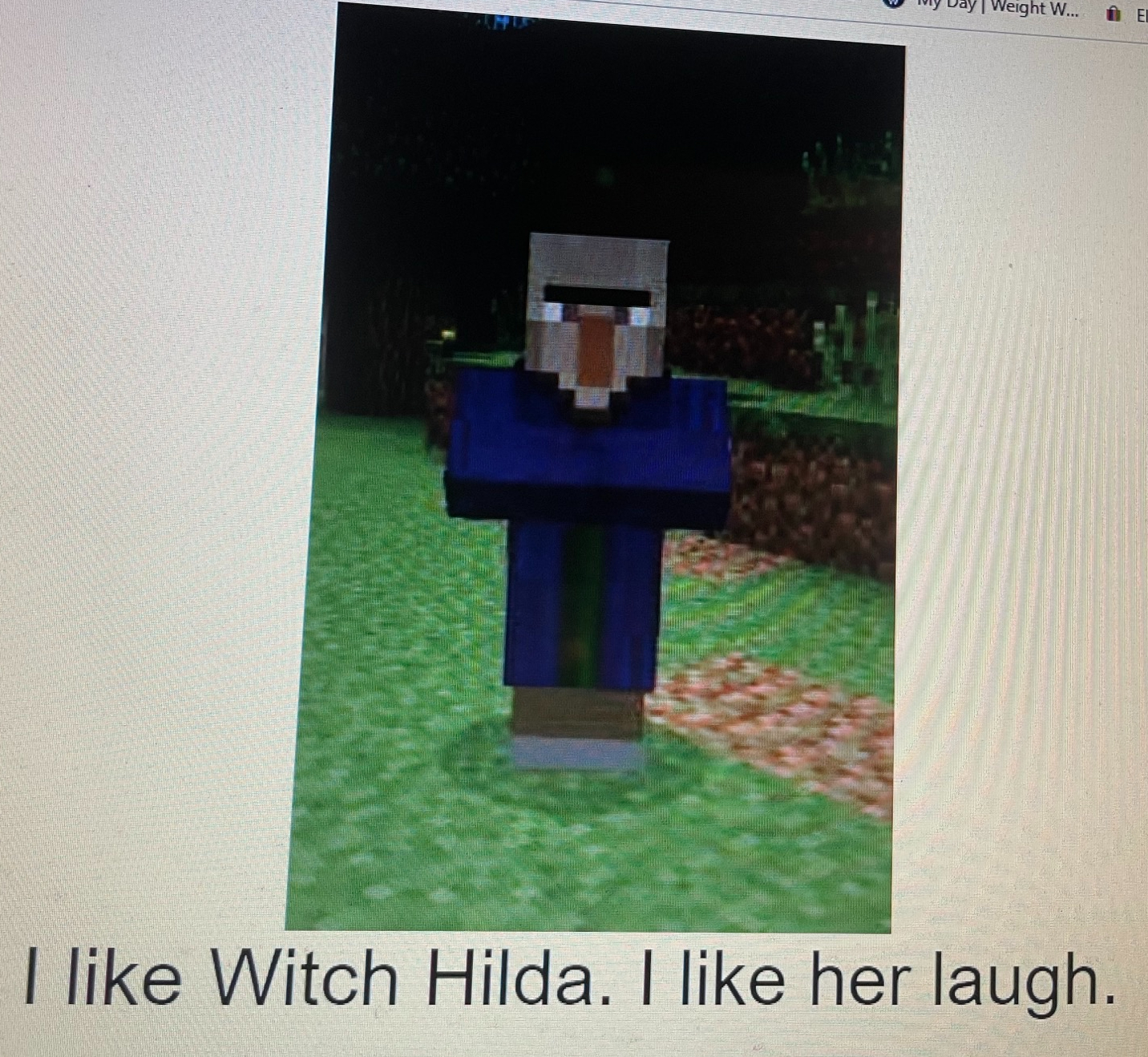
Sarah showed whatever feelings she had, good or bad, and she was mostly pretty happy and joyful, but she could get upset too. She was frightened by random things. I remember a scary Halloween decoration of a witch in Safeway that caused her to scream and cry quite hysterically for a few minutes and I had to take her outside the store while Max spoke to the manager and had it removed. In general she liked witches and magical characters. This one must have shocked her somehow.
It reminds me of how Sarah’s friend Leila would get scared and anxious for years by people singing the “Happy Birthday” song at ballet or school, and she would cry and get upset. Then, Leila reached a point where she mastered this fear and it didn’t bother her anymore.
Am I mastering my fears? No, probably not. I still am afraid everyone I care about is going to wake up dead. I guess it’s going to take more time for this one to get better, but possibly it won’t get better either. We’ll just have to see.
-
Group Think
I slept until after 5:30 am today, which is great for me. I always seem to sleep longer and better when Dad is visiting. I’m not sure why. Maybe some worry or angst is alleviated that all the people (and animals) I need to keep alive are under one roof.
I also talked to Dr. Z yesterday and I told him about our getting ejected from the Grief Group back in April. I don’t know why I hadn’t told him before. Maybe I was a little ashamed about it. He was pretty shocked and upset about the story as I related it. He asked my permission to call the leader of the group and talk to her about the whole thing. He said that he felt responsible because he had referred us to the group and when he makes a referral he needs to know that the referral will be of value to his patients. So I agreed. He also had an idea that the Grief Group leader should allow us a phone call to vent our feelings of upset for the sake of closure, which I wasn’t really interested in since Anger Month is over. But I was curious about what the leader was going to say.
Dr. Z called back and left a message while Dad and Max and I were playing Hearts and said that he had talked to the Grief Group Leader. (Let’s call her Edwina.) Dr. Z reported that Edwina felt bad about how things turned out but was not in favor of Dr. Z’s plan to allow Max and I to scream at her for a while. She also said, rather ridiculously I thought, that if more freshly grieving parents joined the Grief Group, it would be a more appropriate group for us, so we should check back in with her every few months and she would let us know if it would be good for us to come back to the group. Okay, that’s absurd.
Me: “Hi Edwina, just checking to see if a sufficient number of crazy and angry new grieving parents have joined the group to allow for Max and me to come back after you kicked us out?”
Edwina: “Sorry, no, we are still discussing grief purely as an intellectual exercise, and hearing for the 4th time about how [redacted member’s name] was finally able to forgive himself for his child’s death that occurred in 1999 and the memorial tree that [redacted name] planted for her daughter in Israel.”
Me: “Oh, okay, we will continue to check in with you to see if we are able to be admitted to this unique and wonderful support group sometime during the coming decades.”
Or, we could just, as Max suggested, arrange for the murders of a number of other children and then for their parents to join the group en masse. There’s definitely a lot of angles to work here.
-
Pool Party

Dad is back at our place for a few days to oversee the renovation of his new apartment at the Place Where He Is Moving To, and we will have lunch there and meet some other residents. Dad is really looking forward to meeting people and getting involved in the groups at the PWHIMT and he talks a lot about how he rarely sees friends anymore in NYC.
Growing up, my parents worked full time and gave parties, dinner parties, and work parties, had friends over for the evening, and had guests stay with us at our house. They seemed very socially active and they had tons of friends that we visited all the time both locally wherever we were living, and far away, in the United States and Europe.
It feels like it was all of a certain era. I’m not saying that Max and I don’t have friends or that we don’t socialize, but that sort of 1970’s round of dinner parties, big parties, organized socializing, just seems so exhausting. How could they work and do all that after work and on weekends? Did smoking cigarettes help? (They both quit in the 80’s).
Our family (Max, Sarah, and me) didn’t socialize as much as the average family not only because we are socially awkward and Sarah had special needs, but because Sarah never went to our neighborhood school, which is ironically right down the street from our house. So we didn’t form those easy attachments with other neighborhood kids’ parents or recognize neighbors who lived off our block. Polly the Beagle filled in a bit for this function because we got to know all the dog owners in the neighborhood (That’s Bogie’s Dad! That’s Sandy’s Mom!) and for a while there was a nice easy social scene at our local park with people congregating at certain times to walk and play with their dogs. But the Park Police starting really cracking down on leash laws and making the dog owners feel unwelcome and it kind of died out.
I always had some vision in my mind of the women in our neighborhood getting together to play — what is that game? – it begins with a J, Junko or something like that. Or meeting for Toddler Play Group or having barbecues and pool time together. Who knows if that was actually happening?
We joined a private pool in the neighborhood when Sarah was about 5 to 8 years old. I could not stand the social vibe of the pool, with the mothers hanging out on their chaises longues gossiping and tanning and paying no attention to their kids, and the kids treating me and Sarah very roughly in the pool where I supported her in my arms and helped her swim. They squirted her with squirt guns, splashed her deliberately, and came up to me and asked insanely rude questions about her. The parents were equally rude and used to harass me about using the handicapped parking spot.
We left that pool and went to a public pool where people paid by the day, and kids and parents swam together mostly as a family, and we didn’t have those issues at all. While we had been members of the private pool, I had thought that the kids were mean and rude, little bullies in the making. I didn’t have a high degree of tolerance for their behavior and on one occasion I grabbed a kid’s squirt gun after he squirted Sarah and lobbed it over the pool fence. Later, after we had been at the public pool for a while, I came to a different interpretation. I think it was hard for those kids to see me swimming with Sarah and holding her in my arms and talking to her and singing to her and us laughing and having a good time. Their parents were ignoring them, or sometimes publicly screaming at them. It must have been difficult for them to see a child who had her mother’s constant attention and maybe they had some jealous feelings. Maybe I should have been more sensitive.
-
Subscribe
Subscribed
Have a WordPress.com account? Log in now.

