-
Grief Group
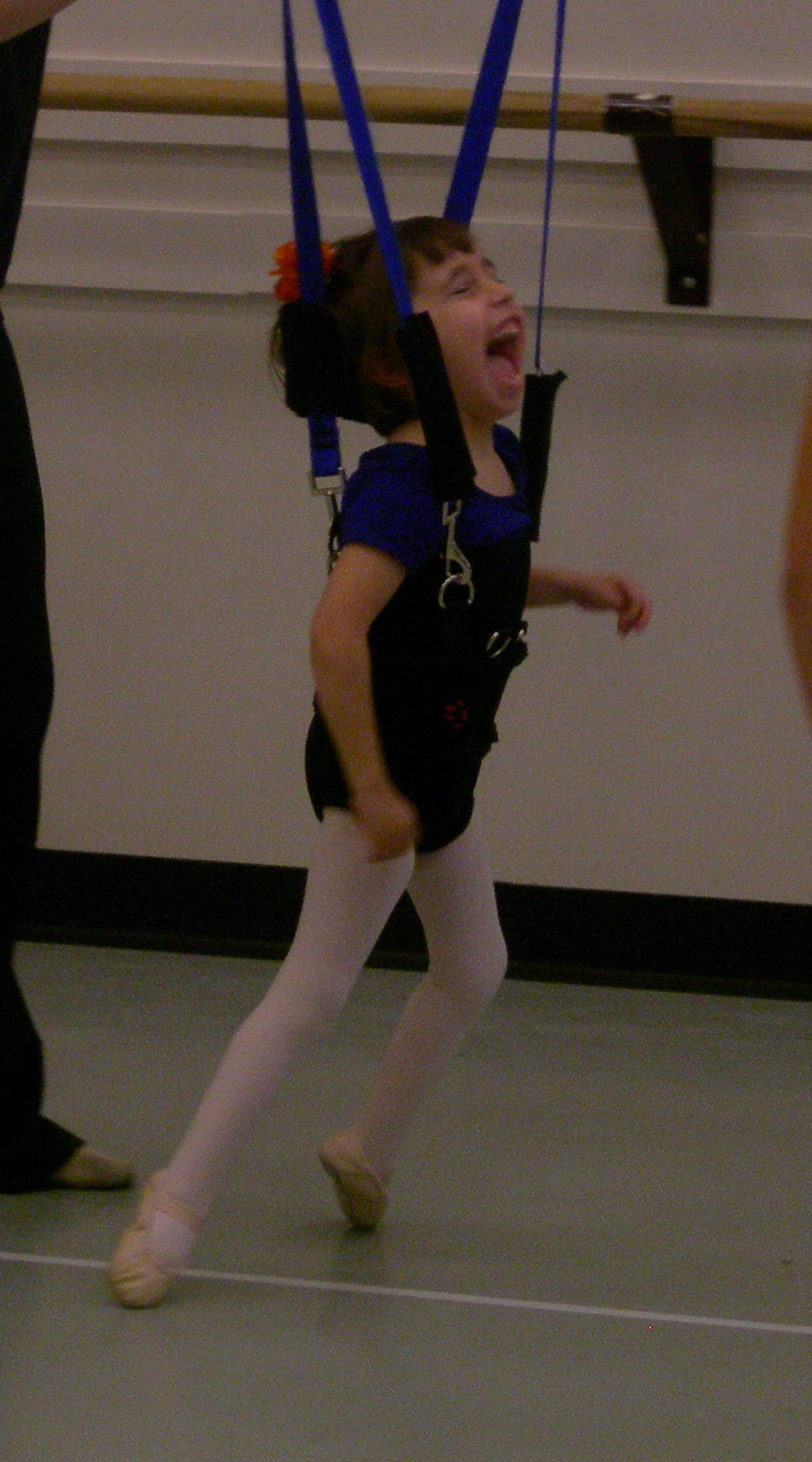
Max and attend a support group for parents of dead children that meets by Zoom on certain Monday evenings. We generally look forward to it and are dialing up right on time. Last night we knew about it, and all day had it in our minds to go, but had gotten caught up in the HBO series Gomorrah and just forgot about group until I was getting ready for bed at around 7:45 (I know) and Max screamed “The grief group!” and we rocketed back downstairs to zoom in.
I don’t know if this is a good sign, that we can set aside our grief and get absorbed in other things, or if this is a bad sign that we are hiding out in distractions and refusing to do the “work” of grief. Or maybe it just means we like Neopolitan gangland dramas.
A lot of people in the group were talking last night about being angry at G*d and struggling with their faith(s) since their children died. The feelings expressed were very raw and painful. I was mostly listening and thinking. It’s never much occurred to me to be angry at G*d. Why be angry at him/her/they when I can blame myself?
I feel guilty and culpable for so many aspects of Sarah’s death. Being away from home. Choosing a babysitter who was not a good fit. Thinking Sarah was safe in her bed when she obviously was not. Giving her a genetic mutation. Getting pregnant at 41. Having seizures myself. Not knowing that she was in danger when I was in New York.
Max blames himself too. When he found Sarah, she was blue in the face. Although from what I have read this is simply a sign of oxygen deprivation that accompanies death (and it also happens commonly after a grand mal seizure), Max believes that Sarah’s death occurred because she suffocated face-down in her pillow. I don’t believe that was the mechanism of her death, but even so, I don’t think this would have been his “fault.” He keeps saying that (1) he may have heard a small noise during the night of the 18th over our baby monitor, but he was too tired to investigate, and thus missed a chance to save Sarah from putative suffocation; or (2) he could and should as a responsible parent have “forced” her to sleep on her back.
I think that both of these suppositions are fanciful. Sarah made little noises most nights that I would hear on the baby monitor, and unless she was outright crying, or up for good, I just went back to sleep. She gave snorts, vocalizations, sighs, and other sleep noises like anyone else. They were not a signal of trauma. I also really don’t see her agreeing or learning to sleep on her back. She had a will of iron and there was no way she was going to go for that. Finally, Sarah had GERD (reflux) and she would have been miserable on her back.
Our group leader says that what she likes hearing in all this “mishegoss” and mental masturbation (my terms) is that Max and I share these thoughts with each other and receive comfort from the other person. I suppose she’s right, we are very hard on ourselves as individuals but we support each other well.
-
Sleep Safe

I’ve never had any trouble “springing forward” as we call the shift to Daylight Savings Time and usually Sarah didn’t either. She was a very good sleeper for most of her life except when she was a newborn, which was a very hectic period, to say the least. As I’ve said before, she was a very good nurser and she was basically at it all night. By the time she was four months old, we were pretty desperate for a good night’s sleep. Or a few hours of unbroken sleep.
Everyone had advice for us. Sleep train. But what did this mean? Put her down drowsy but awake? She acted like we stole her wallet when we did that. Ferberize. This sounded mysteriously clinical and vaguely related to carpet-cleaning. Cry It Out. Not appealing at all and neither one of us felt we could handle it. Something called The Sleep Lady Shuffle. We bombed at this; Sarah seemed to have incredible spidey senses for when we shuffled off. The vacuum noises and swaying recommended by Happiest Baby on the Block? All fun for Sarah and Dad but not sleep-inducing.
Or maybe we just couldn’t do it right. We were constantly critiquing each other. No, don’t pick her up! You don’t do Phase One like that! This was probably the most argumentative phase of our marriage. We felt incompetent and irritable. And Sarah was a kind of a Miss Crabapple herself.
To those who wonder why we didn’t just let Sarah sleep in our bed, she was already there every night, and that just made the problem worse. She really liked nursing, all the time — say every 45 minutes — with a great deal of gusto, and a lot of groans and deep sighs while she ate. Frankly, she sounded like a Swedish Porn Star. It was impossible to sleep through, and Max was wearing earplugs.
So what did we do? We first-worlded the problem and hired a sleep trainer. We went to the sleep trainer’s office when Sarah was four and half months old and basically cried and told her what tired, irritable, and pathetic schlubs we were. (Did I mention that by this time I had wrecked our car driving to work on 3 hours sleep?)
The sleep trainer agreed. She called me an all-night breastaurant. Then she gave us instructions for how to put down Sarah (in her own room, in her own crib), to check on her in five minutes, then in ten minutes, then in ten minutes again if we needed to, reassure her but not pick her up, and so forth. Sarah also needed 3 naps a day (something she had refused) and a “dream feed” for the first week.
Sarah turned out to be an honor student and not only slept 12 hours that first night but took all her naps and basically from that day forward turned into the sunshine kid we knew. It was amazing what proper sleep did for her personality. And for ours too!
Of course, at the time all this was going on we had no clue Sarah had any medical issues at all. She was a normally developing baby as far as we knew and her pediatrician told us, even a bit advanced for her age. She had a “pet word” that she used when she wanted to nurse, she would look at me and say “Nee.” That was her word for nursing when she was an infant. I remember we told the sleep trainer that and she was amazed. “Does your pediatrician know that?” she asked us. We felt very smug about our little superstar.
Since she was ten, Sarah slept in a SleepSafe Bed. It’s a special bed that’s built like a hospital bed that can go up or down at the head or foot or elevate and lower, but it’s made for kids so the rails are more hidden and come in colors. Her bed was red. We also put lots of stickers on it of Minions, Minecraft, and peace and love. I took it for granted that she was safe in bed. Certainly I never thought of her in danger there.
-
Resume
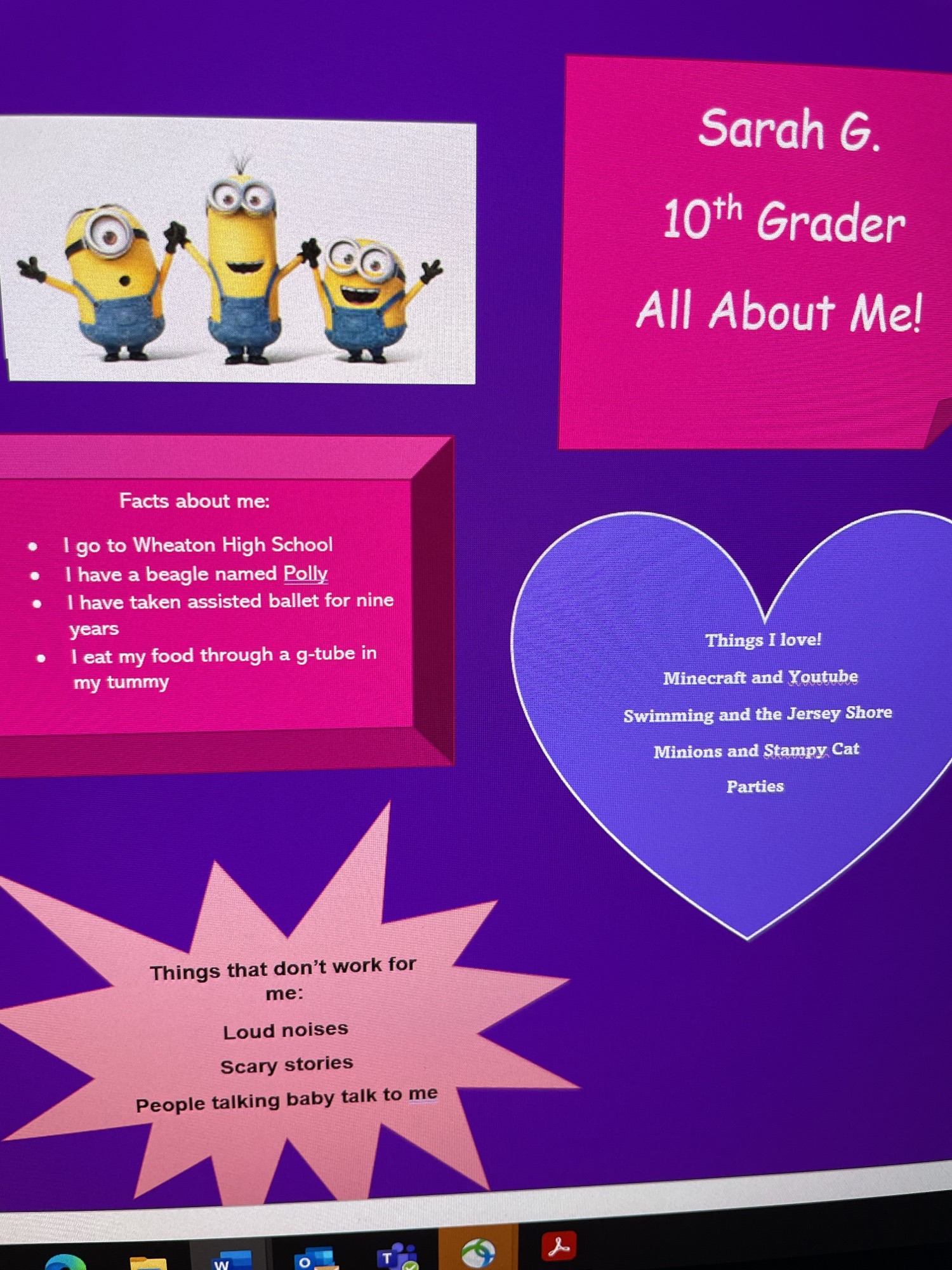
Sarah was very jazzed about starting 10th Grade on August 29th. She was in a high school program that would last until she was 21, and that had some academics but also focused on “life skills” like learning how to commute, how to cook some basic meals, and how to use money. Initially, we had looked at other programs for her, more academic programs, but Sarah was simply not interested. Also, she wanted to be with her boyfriend Danny. Ultimately, the LFI program (Learning For Independence) was a very good fit for her and she loved it.
One of her favorite jokes to play on us was to come off the school bus in the afternoon very straight-faced and expressionless. We would be concerned and asking “Are you okay? Did something bad happen at school today? — while frantically flipping through her notebook to see what the notes were from the school. When she knew she had us, she would break into a big smile and start laughing. “You trickster!” I would say. “You got mommy and daddy!” She was very proud.
We had plans for the last week before school started on August 29. We were going to go the pool together, just the two of us. (My husband has this thing about only swimming in natural bodies of water, as if he’s Thoreau or something). And I proposed the idea of a resume for her now that she was going to be a 10th Grader and new 9th Grade kids would joining her class, plus she might be going out to work somewhere in the community. We weren’t sure where — maybe a nature center? I didn’t want her working at Walmart or someplace like that.
Anyway, she was very excited when I showed her my idea for a resume, which I did a rough draft of in her preferred color scheme of purples and ultra neon pinks plus Minion pics and Stampy Cat too. We were planning to keep working on it and refining it when I got back from my trip with my dad. I just found it in my files the other day. It makes me a little sad but I still love it.
-
SUDEP
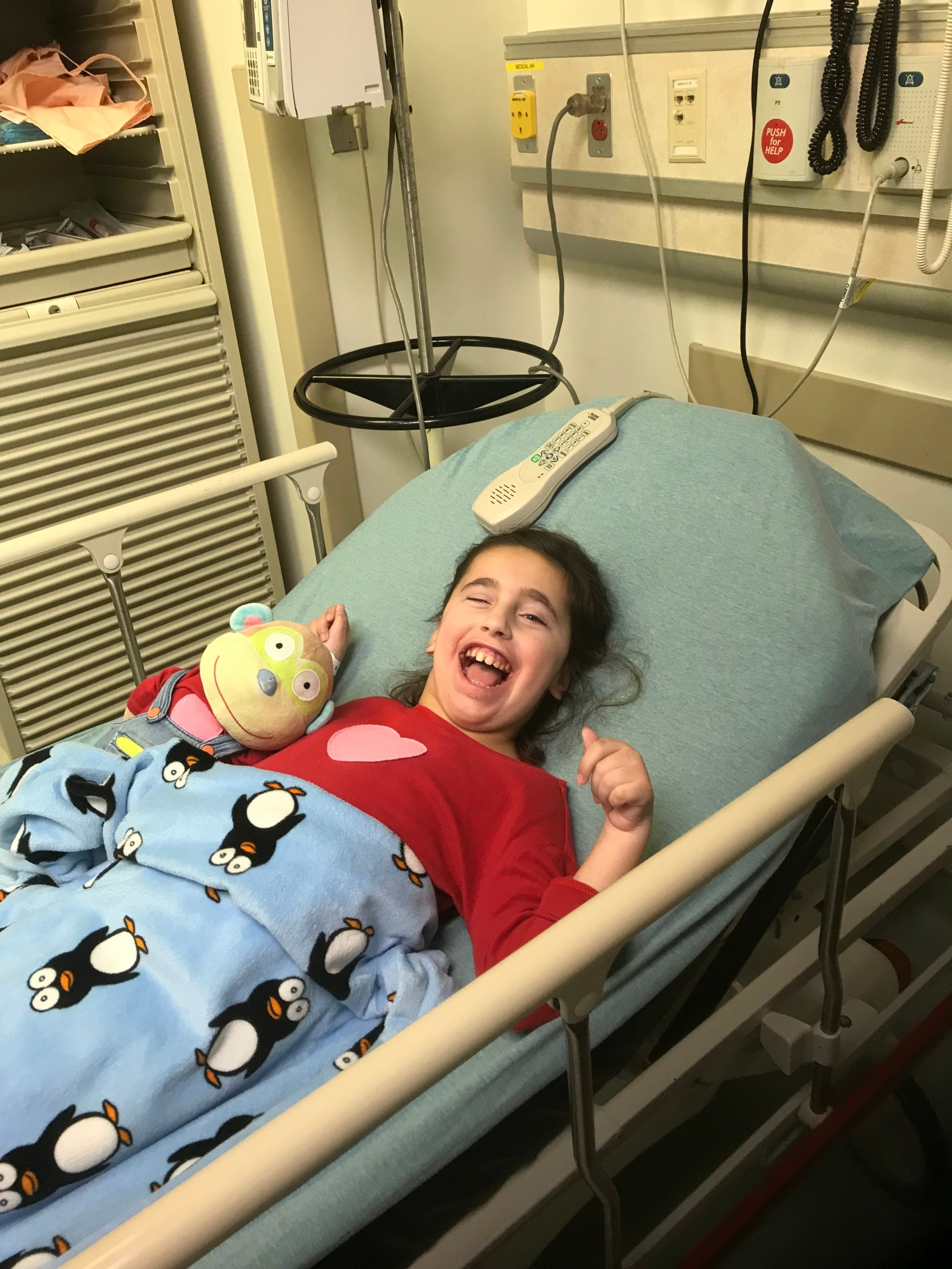
Cure SPG4 has added Sarah to their website with an “In Memory of” overlay, and with some words we wrote about her. If you make it over to the Foundation’s webpage, scroll down to the bottom to the “We Are SPG4” section and swipe through the kid’s little bios. Sarah is kid number 4, all the way to the right, and if you click on her she pops open into a full page where you can leave her a little “heart” (and if you feel like it leave hearts for the not-dead kids as well). It’s quite nice, I think. I won’t flog you about donations because there is a button right there if you are able and willing to do so. There is so much need these days, you have to decide where and if you can help.
I don’t see any other kids on the website with an “in memory of” overlay on their photos, so either no other parents have informed the Foundation about their kid’s death, or as I fear, we are the only known death so far from complications of Complex Early Onset SPG4 as it’s now called in high society circles since about 2020. Although, of course, Sarah also rides with the SUDEP kids (Sudden Unexpected Death In Epilepsy), the Cerebral Palsy decedents, and the plain old vanilla SUDC (Sudden Unexplained Death in Childhood) members. Not to mention the Asphyxia cohort? Okay, this is getting ghoulish. But what I mean is that perhaps there are some SPG4 kids who have died and simply are not attributed to complications from SPG4. They and their families may not have even known about the rare disorder. It takes a lot of time, sick leave, and money to pursue this level of medical care and diagnostic testing.
Sarah had her first seizure when she was 14. Max was telling her a bedtime story and I was in the living room and all of a sudden he shouted my name very frantically. I ran in and we saw her having a grand mal seizure which lasted about 20 seconds. She recovered well but was very sleepy. We talked to her neurogeneticist and he got us a referral to an epileptologist at Johns Hopkins.
I had always watched Sarah very carefully for any sign of seizures because I have taken medication to control seizures for many years. Like any illness, my epilepsy has waxed and waned. The past 20 years or so it’s been controlled very nicely by medication and I barely think about it at all. However, my pregnancy with Sarah was delicately managed for this complication and it’s one of the reasons I waited so long to have a child.
Sarah didn’t have a whole lot of seizures, maybe 4 or 5 in her whole life. They tended to occur when she was tired out, at the end of the day. They usually didn’t last long and we could give her rectal Valium to stop them if they lasted more than a minute or two. There was no evidence we were aware of that she was having seizures during her sleep, but we didn’t do an awake/asleep EEG and it was never suggested to us. I knew about epileptic bed death, as it’s sometimes called, but associated it with people who have severe, untreatable seizures — not my daughter and me.
I guess that’s really the point. I did not see death touching my family or coming for my family. I thought I had covered all my bases and checked-off all my to-do lists to keep my family safe. Now I see death everywhere, constantly, every time Max sleeps late or Polly coughs or my sister-in-law has surgery. There is no safe place anymore.
-
Warm Love
I found out yesterday that there is (maybe, I’m not exactly a reliable narrator about this stuff) a theory of quantum mechanics (the physics thing) called the Many Worlds Interpretation. If I’m understanding correctly, MWI puts forth that there are an infinite number of universes all existing at the same time. Yes, this means parallel universes, like you see on the Star Trek episodes which are kind of campy and fun where Mirror Spock has a beard or Mirror Kira is dressed up in bondage wear.
Apparently, the physicist who first published about this theory, Hugh Everett, was so derided and laughed at that he dropped out of science completely in the 50’s. But since the 70’s it has become a well-accepted part of quantum physics. (At least I think so.)
So anyway, what does this have to do with me? Well, obviously, all I need to do to see Mirror Sarah is (1) create my own particle accelerator at home; and (2) open up a small black hole; and (3) jump into an alternative universe and find her. It’s just that easy. Or not.
What if Mirror Sarah turned out to be one of those incredibly vain and effortlessly popular 16 year-olds walking around with headphones and a full face of make-up and perfectly coiffed hair? The kind of girls who intimidated me in high school and still do? Probably she wouldn’t smile, but would walk right past me, sneering a bit at my Mom Jeans. That would be rough.
Or what if I found that in another universe I had her much younger, say 25, and then had 2 or 3 other kids, but went through an ugly divorce. And I would have never met Max. I could have married one of the not-very-nice guys I dated in my twenties. Oh no.
I remember on August 18 when I got the telephone call from Max that Sarah had died my father urged me to stay over in New York City and not try to drive home. But I just had to get back home. I got in our old wheelchair van and started the trip through the Lincoln Tunnel, down the Jersey Turnpike, Delaware, and then across Maryland. The whole time I listened to an old Van Morrison CD I had in the car, repeating and repeating the song “Warm Love,” and crying.
Inside it’s warm love
Inside it’s warm loveAnd it’s ever present everywhere
And it’s ever present everywhere
That warm love -
Staging My Grief
I’ve read a lot about the grieving process and the stages of grief. The model developed by Elisabeth Kubler-Ross back in the 1960’s is still pretty widespread and accepted in griefology and grief counseling. This is the “Denial-Anger-Bargaining-Depression-Acceptance” rubric that someone pointed out sounds like a Jewish law firm. (It was a line in the movie “All That Jazz.”)
I’m not sure how to stage my grief according to this model. I don’t think staging my grief is a good idea anyway, as it would be sort of like forcing audiences to sit through a musical version of Sophie’s Choice or something equally depressing. (Not that I’m comparing my sitution to the Holocaust.) Or that documentary that came out a few years ago about Indonesia’s regime from the 1960’s, now grown old, acting out for the camera their mass killings while wearing drag or cowboy outfits. The Act of Killing. A must-see if you missed it, truly one of a kind.
My personal stages of grief, offered up with absolutely no peer review or scientific validity testing whatsoever, would be as follows:
STAGE ONE: You do, and do, and do. In Stage One, you organize the funeral, you notify relatives and friends, you prepare your house for all the company that’s coming, and shop and order platters of food. You write eulogies and give directions. You choose clothes and you get haircuts and manicures. You cancel deliveries of expensive medications and other supports. You have checklists and notes on your phone. You make sure there is something gluten-free and there are no nuts served. People tell you they can’t believe how strong you are.
STAGE TWO: Eating. What the Germans call Kummerspeck. During this stage, you stuff your face with as much food as possible and gain weight. Grieving takes energy, and also, you want to take the edge off and numb down those really bad crying jags with some carby sweets and treats. Your spouse does the same and you compare how big your grief guts are getting. Of course, you could be one of those annoying people who loses your appetite and takes a lot of weight off in the grieving process. If so, I simply have nothing for you.
STAGE THREE: Mental Whiplash. Throughout this stage, you will be ambushed by irrational thoughts popping into your mind, like “When [loved one] comes home, we will [insert activity here],” or “It’s 7:30, time to start [loved one’s] [dinner/toilette/trombone lesson]” before your rational mind instantly whiplashes you back to the cold reality of your loved one’s death and permanent absence. It’s a lot of fun and makes you feel crazy and more depressed than ever.
STAGE FOUR: Crying in the Grocery Store. And the Dog Park. And the Car, and the Dentist, and the Nail Salon, and…you get the picture. Pass the Kleenex. One of the other hallmarks of Stage Four is Waking Up Screaming At People In Your Dreams, which adds to the angst of the experience.
STAGE FIVE: I’m not sure if I’m there yet. Stage Five means some good days where Max and I are excited about our upcoming trip to the UK and I can feel pretty serene, but the bubble can be burst pretty easily. Something will remind us of Sarah and we’ll have a little cry. Last night I had the hiccups and we remembered how funny Sarah always found that, as if I were performing physical comedy just for her. We are very easily triggered. But I tried to remind myself that it had been a pretty okay day up until then, without a lot of crying and “Where-Is-Sarah” perseveration. I slept pretty well last night. That’s good enough. Maybe Stage Five is “some good days?”
-
Memorials

Unfortunately we are limited to 32 total characters by the Parks Foundation for the plaque for Sarah’s memorial park bench, so my planned enscription that she will be remembered in winter, spring, summer, and fall, however poetic, has to be shelved and abbreviated. I can’t even squeeze in one season after her full name and her birth and death year. A little stingy but I get it.
Cure SPG4 is adding an “In Memoriam” section to their website and it will feature a picture of Sarah and a little statement we wrote about her. I don’t know if there will be any other children. Dr. Z suggested that I ask the Complex Early Onset SPG4 study people to send out an email to all families who lost children during the study inviting email contact with our permission, that this would get us around HIPAA privacy regulations. I don’t know if I have the energy to deal with this right now, and my fears are — what if no one contacts us? What if Sarah is the first, the only known child to die from complications of SPG4? What if we were the only careless ones?
We are still waiting to hear from Sarah’s school about some kind of memorial or donation that they need, but I’m not surprised it’s not a priority. I’d also like to set something up at her camp, which she loved, and possibly the spot on the Jersey Shore where Max’s cousins live that we visited every summer up until the Pandemic, which she was crazy about. But we can’t memorialize every spot of the earth that Sarah touched.
I know my Memorial Fever has as its counterbalance my wish to know where Sarah is now. I’m not totally crazy and yes, we did see Sarah at the funeral home the day after she died. They took good care of her. She was still wearing her pajamas and she was tucked carefully under one of her blankets with pink unicorns on it. Although her gums were a little gray, she looked mostly like herself. Her hair still smelled like the conditioner and shampoo I used on her, and I held her hand and kissed her.
Sarah’s ashes live now in our living room, but Sarah’s soul and spirit, the wholeness and essence of her, have of course begun a journey elsewhere. I don’t know exactly where and no one can tell me. Can one ask Child Protective Services to perform a welfare check on a dead child? Probably not.
-
Madame Tootsie Bagel

One of my mom’s nicknames for me was Madame Tootsie Bagel, and I started calling Sarah that too, and so did Max. It seemed to suit her combination of cuteness, joy, and a little sass. I always assumed Mom got this name from old radio programs of the 1930s or 40s, or from vaudeville, where she got a lot of the songs she used to sing and other nicknames she had for us. But I’ve Googled “Madame Tootsie Bagel” many times to no avail. It must have been Mom’s singular creation.
We called Sarah ‘Madame Tootsie Bagel’ a lot around her assisted ballet class, which she went to from the age of four onward. She really loved the class but sometimes she didn’t like interrupting other activities in order to get dressed in her leotard and tights and ballet shoes. “Madame Tootsie Bagel! The dance awaits!” we would tell her. “Madame Tootsie Bagel must dance!” She would laugh. One time she looked back up at us and said very clearly “That’s me.”
Sarah’s speech was like that after about age 3 or 4. She did not talk regularly or consistently and she could not produce speech in response to prompting. But every once in a while, she would produce a phrase or sentence spontaneously out of the blue. There was the time in 2011 we test drove our Subaru Forester and she exclaimed happily “I like it!” On another occasion when she was 9 or 10 we drove to our neighborhood pool but it was closed for some reason and she sadly announced “But I love the pool.”
A memory has been making me sad lately of Sarah when she was still very small, around two or three years old. I took her to Macy’s to buy a winter coat in the infants and toddlers department and we picked a little pink coat and snow pants out and were at the counter paying. Sarah was in her stroller and she saw the giant gumball machine that was next to the counter. She didn’t chew gum, she wouldn’t have had the muscle strength to do so, but she was attracted to the bright display. She pointed her finger and said “Mama,” two tasks that physically required a lot for her. At the time I told her “Honey, you don’t chew gum” and that was the end of it. I wish now I had gotten her a gumball. She could have just held it in her fist. She didn’t have to chew it. She obviously wanted it and put a lot of energy into pointing (requires finger isolation) and saying “Mama” so clearly. Her little heart wanted it.
Incidents like this make me feel so guilty now, as if Sarah was a deprived child raised by an insensitive parent. My rational voice tells me “Your kid didn’t get a f— gumball. That’s it. It’s not a tragedy” But I cry anyway. Maybe I’ll buy some gumballs today and release them into the wild for my Madame Tootsie Bagel.
-
Gumdrop Tree

Yesterday turned into a bit of a weepy sad mess. I started looking at photos of Sarah on my phone, the most recent ones, and thinking ‘This one was 19 days before she died.’ ‘This one was four months and eleven days before she died.’ Did she look as if she was detaching from us? Ready to leave? Eager to head out?
I don’t think so. She had a certain adolescent ability (and need) to tune us out these last couple of years and wasn’t always as joyful and effusive as she had characteristically been as a smaller child. Her affect was flatter from about age 13 and we worried that she might be depressed or in a lot of pain. We had a couple of visits with a neuropsychologist at Kennedy-Krieger who talked to her with our help, and his opinion was that she was more of an adolescent now and adjusting to a lot of school and friend changes with Middle School. He also recommended a different seizure medication because the one she was taking made people prone to depression, so we changed that.
She went on to really enjoy Middle School, meeting her boyfriend Danny and her really good friend Clay (Clay is a girl). The Pandemic managed to screw up the last part of 7th grade and all of 8th grade but she did fairly well with remote learning because she had her father on Zoom with her all day long plus a strong Middle School resource teacher, Mr. Kornfeld. Actually, I think all the kids in her classes benefitted from Max being around and I got a kick out of him sometimes answering their questions.
So yesterday I was just working myself up into a pretty bad state looking at pictures of Sarah, which is actually something I like doing. The thought that I will never see her face again overwhelmed me. A couple of weeks ago I picked up one of Sarah’s stuffed Minions (I think it was Otto) and he started playing a song, one that was part of our bedtime routine for Sarah. Polly the Beagle immediately looked to Sarah’s chair. She must have thought Sarah was back. I felt so bad for her. She can’t possibly understand what’s happened. That day must have been terribly confusing for her, with the rescue squad and funeral home people coming into the house and touching and taking away her girl. She didn’t like strangers getting too close to Sarah.
I was crying for most of the day and at one point I stood looking out the window. There’s a very large boxwood in our backyard, really huge. We call it the Gumdrop Tree. There are some old dead vines left on it and one looked like it had grown up into the sky. “I wish I could pull on that and bring you back down,” I thought of Sarah. If only it were that easy.
-
Dead Children

There’s a new dead child memoir (as I call books written by grieving parents) coming out that I’m looking forward to reading. I read an excerpt in Atlantic Monthly yesterday and really liked how the author (Colin Campbell) seemed to be thinking and talking about grief and the weight of his own thoughts. (The book is called Finding The Words and it’s to be released March 14.)
Campbell talked about how people sometimes say to parents of dead children “There are no words,” which can be difficult to hear because there are a lot of words we want to hear, like our own children’s names. And your memories of them, no matter how small. He also talked about not liking it when other people discuss processing their own grief (about a parent, or a pet dying, or some such experience). This actually does not bother me at all.
Perhaps this is a male/female difference. In terms of communicative style, women are known for their propensity to build on the communications of others and their search for connectivity. At any rate, I have no problem hearing how awful someone felt when their grandfather or their beloved dog died when they talk about Sarah; it makes me feel that person is trying to build on her death and enter the community of grievers. But Colin feels differently, as if his experience is not being given enough weight. Of course, I have my prickly little peeves too about things people say, as I’ve written about here in this blog.
Colin lost two children at the same time, in a car accident, which must be incredibly devastating. I hope writing was a solace to him. I know it’s been very helpful to me. In the beginning, I had this obsession with telling “the story of Sarah” in a very linear fashion, from birth (or before) through her death as if I were writing her biography. I kept worrying that I would leave something out and the fact that my thoughts were never in chronological order made me anxious and depressed. The whole thing seemed to be turning into a medical saga, “Race for the Genetic Code!” or some such thing, with which I wasted several weeks in Microsoft Word.
My good friend from high school, Susan Hillenbrand Avallon, who is a story editor (or something) in the film business, gave me some good advice to just let Sarah’s story have its own shape and logic and not try to control it. To write about what was on my mind, as if I was talking to a compassionate and nonjudgmental friend. So I started this. And the rest is history.
-
Subscribe
Subscribed
Have a WordPress.com account? Log in now.

