There’s a bunch of local news stories this morning about the arraignment of the parents of a teenager who died in their home last May, almost a year ago. Apparently the kid was found emaciated and unresponsive by the Rescue Squad and died a few minutes later at age 17. The child had serious and ongoing medical issues although it’s unclear exactly what those issues were because none of the kids in the house (there were nine) had much in the way of medical or school records. The mother said the child had diabetes and multiple sclerosis and long Covid-19.
I’ve seen stories about kids with disabilities either neglected or outright murdered by their parents over the years and I try not to read them or dwell on them. Normal, typical kids get abused and neglected and murdered too, very sadly, and unfortunately, people without a lot of community supports and personal and social supports (good medical insurance, good school district, flexible leave policy at work, reliable transportation, decent salary) have a much harder time raising children, let alone children with disabilities. Although parents who kill or neglect their disabled children seem to be quite well off sometimes too.
So I used to often think “There But For the Grace of God Go I” when I saw such news articles, in a kind of whole-wheatier-than-thou manner. However, you’ll be tickled to know that now that I’m firmly entrenched in the Anger Stage of Grief — see yesterday’s post — I’m jumping salty. I’m chewing fire and pissing vinegar.
Why can’t people keep their kids with disabilities alive and give them some quality of life? Why have nine children? And why is it that the Grandma is now in court, upset and crying, but when this was going on, and the home was filled with trash and feces, she apparently wasn’t paying any attention?
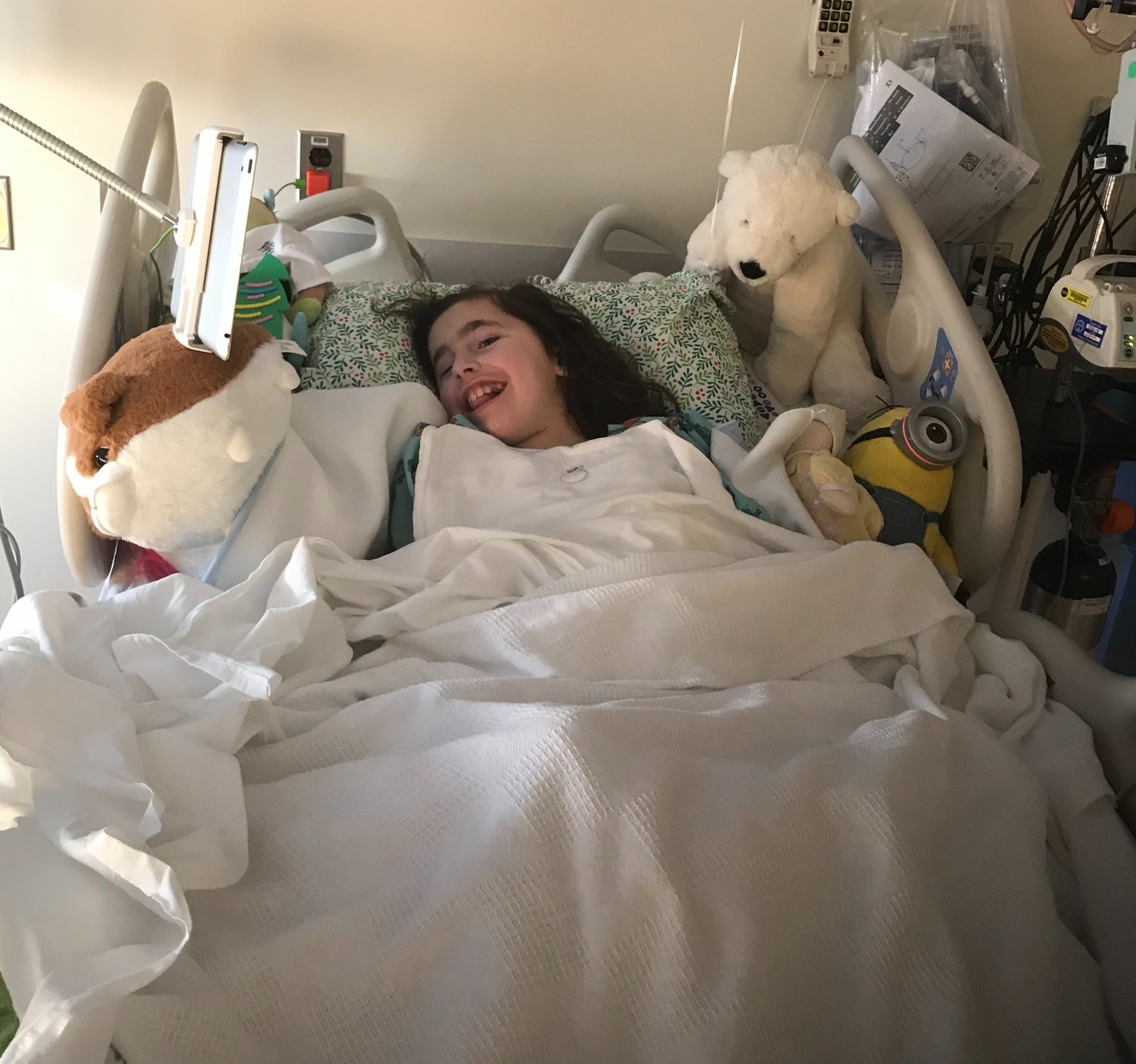
I used to worry that Child Protective Services was going to take Sarah away from us every time her physical therapist or another doctor reminded and bugged us that she really, really, needed to wear her AFO’s (foot braces) every day, and not just when she was willing to. Or when she developed a skin lesion on her sacrum (tailbone) in 2021 that threatened to become a bedsore. Bedsores are really dangerous for people with disabilities because if they advance, they can go deep and become septic and turn into life-threatening infections. We took her to a special Wound Clinic at the University of Maryland to resolve it.
I know I sound like I’m patting myself on the back. But I see in my peer group of Special Needs Moms (and Dads too), kids who are taken to dialysis several times weekly at a long distance; kids going to multiple therapies a week and therapies and clinics around the country; kids who are supported and educated and cared for through multiple hospitalizations and surgeries; kids receiving their parents’ kidneys. We are certainly not unique in the attention and care we gave Sarah. I had many role models for this job. I’m looking at you, Monica, Ann, Nahid, April, Michele, Misato, Kathy, Debbie, Carla and so many others too.
On my block there are (or were) two mothers of grown-up children with disabilities. My next-door neighbor, who died about 18 months ago at age 97 or thereabouts, let her grown daughter move back in with her about 10 or 12 years ago. “Loretta,” the daughter, is on the autism spectrum, although I don’t know if she thinks of herself that way. She has a horrible time with noise or really any sensory stimuli. She called the Police and Fire Department on us when the addition to our house was under construction and she couldn’t deal with the hammering. She also goes around dressed up like a beekeeper every day of the year. There’s a lot more to Loretta, but let’s just say she’s still a good neighbor. Across the street is “Nancy” who has two adult special needs children. There was Mark, who lived at home for many years and had intractable epilepsy. We were used to seeing the Rescue Squad come when he had a particularly bad seizure. Nancy’s older daughter, whose name I don’t know, has been institutionalized since birth for a severe genetic disorder and lives in a group home. That was the norm in that era, and Nancy visits her a lot. Nancy was at Sarah’s funeral and has been a source of support for our whole block.

